
Cardiothoracic Surgery
You will apply knowledge for the prevention, diagnosis, and treatment of cardiovascular and pulmonary patients.
Download the brochure

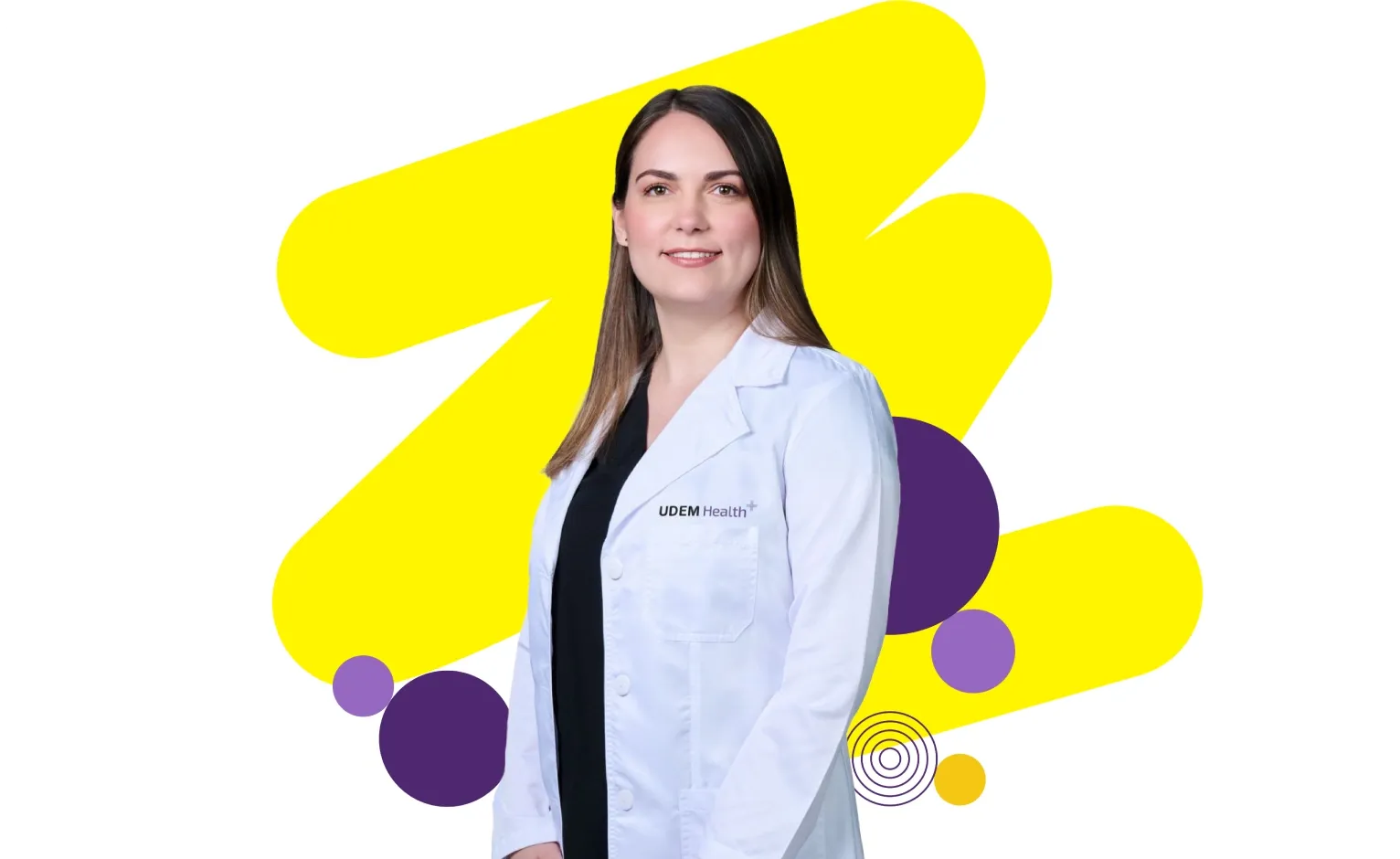
Joan Stephanie Celis Jasso
Graduate Program Director
Joan.celis@udem.edu
+52 (81) 82151000 ext. 1291
Description
The specialist in Cardiothoracic Surgery, through medical practice grounded in problem-solving educational methodology, characterized by being able to provide quality professional care to the community in any national and international setting.
The duration of the Specialty in Cardiothoracic Surgery is 4 years.
Required Academic Background: 2 years of General Surgery Specialty.
Primary Clinical Site
-
Mexican Institute of Social Security (IMSS)
- High Specialization Medical Unit, Cardiology Hospital No. 34
Recognition of Official Validity of Studies (RVOE) granted by the Secretary of Public Education according to agreement: 20240081, valid until 01/19/2030.
Objective
To prepare medical specialists in the field of Cardiothoracic Surgery with academic training that includes knowledge of basic sciences, clinical sciences, and the fundamentals of general surgery, capable of diagnosing and resolving cardiothoracic disorders, skillfully utilizing cutting-edge technology in thoracic surgical procedures to develop a professional practice with the highest standards of patient care and safety; coordinating with the multidisciplinary healthcare team.

Admission Profile
Understand the scientific foundations of medicine, particularly in General Surgery.
Have extensive knowledge of scientific methodology and epidemiological methods.
Master the Spanish language both orally and in writing.
Understand and translate the English language.
Manage diagnostic and therapeutic procedures in Preventive Medicine and Epidemiology.
Work effectively in a team.
Systematically retrieve medical information.
Have basic internet navigation skills.
Know how to use Microsoft Office.
Manage statistical packages.
Demonstrate warmth and availability in patient and family care.
Act with discipline, order and punctuality.
Possess values of honesty and respect for others.
Maintain a habit of studying and participation in continuous education activities.
Promote a healthy lifestyle to prevent diseases and enjoy a better quality of life.
Have an enterprising spirit, attitude for academic advancement and selflearning.
Take responsibility and leadership in the healthcare team.
Demonstrate perseverance in professional development.
Graduate Profile
Upon completion of this Subspecialty in Cardiothoracic Surgery, you will have acquired the following knowledge:
Demonstrate deep knowledge of the embryological, anatomical, genetic and physiological foundations of cardiothoracic structures, as well as the natural history of cardiovascular diseases, their pathophysiological mechanisms and anatomopathological lesions, and methods for primary, secondary and tertiary prevention.
Have knowledge of diagnostic procedures ranging from medical history to invasive and noninvasive diagnostic imaging studies—chest X-ray, electrocardiogram, stress test, echocardiogram, cardiac computed tomography, magnetic resonance imaging, scintigraphy, catheterization and positron emission tomography—and understand their indication, interpretation, utility, risks and complications.
Perform actions for prevention, selfcare, diagnosis, medical-surgical treatment and rehabilitation with the support of current technological resources available for comprehensive care of cardiothoracic problems and their complications.
Apply current national and international regulations related to discipline and quality healthcare with an emphasis on patient safety.
Understand the theoretical aspects of the teaching-learning process applied to patient training, accompanying family members and the multidisciplinary healthcare team.
Promote healthy lifestyle habits, identifying risk factors considering intercultural elements.
Apply knowledge of information and communication technologies to daily practice.
Upon completion of this Subspecialty in Cardiothoracic Surgery, you will have acquired the following skills:
Apply with skill and dexterity the most updated procedures and technical resources in Cardiothoracic Surgery for the prevention, diagnosis and comprehensive treatment of cardiothoracic diseases.
Perform with expertise the specific procedures of the discipline, such as sternotomy, arterial cannulation, orotracheal intubation, tracheostomy, pericardiocentesis, pericardial window, coronary revascularization, prosthetic valve implantation, pacemaker implantation, palliative and corrective surgical procedures for congenital heart diseases, anatomical and nonanatomical lung resection, thoracentesis, pulmonary decortication, endoscopic biopsy and transplantation.
Address the pediatric patient with congenital heart disease comprehensively and select specific surgical techniques for their correction or palliation.
Integrate in a timely and hierarchically ordered manner the different medical problems of the patient to establish appropriate diagnoses and propose the best surgical option.
Treat the sick individual as a biopsychosocial entity in the areas of competence, including hospitalization, outpatient care, hemodynamics, operating room and intensive care.
Provide ongoing communication resulting in effective information exchange and proper relationships with patients, their families and the healthcare team.
Plan a study and treatment program correctly, including emergency cases and based on scientific criteria, with principles of quality service to contribute to sustainable human development with equity and justice.
Coordinate with other specialists to offer the best comprehensive therapeutic option.
Participate as a leader in multidisciplinary care for heart and lung transplant patients.
Employ scientific methods to conduct clinical research and design projects that address health needs.
Demonstrate timely responsiveness to emerging diseases by establishing prevention and control strategies.
Upon completion of this Subspecialty in Cardiothoracic Surgery, you will have acquired the following attitudes:
Apply the ethical and deontological principles of medical practice.
Assume responsibility and a serviceoriented attitude towards issues involved in the health-disease process.
Achieve a positive and respectful relationship with the patient, family and professional environment.
Prioritize medical decisionmaking in prevention, diagnosis, treatment and rehabilitation based on risk–benefit and cost–benefit analyses, contributing to improving the patient's quality of life.
Demonstrate deep respect for the environment.
Have an awareness of social responsibility and importance within the healthcare system.
Practice selfcriticism to recognize limitations, seek support when necessary and refer the patient when appropriate.
Curriculum
| Clave | Materia | CRS Año |
|---|---|---|
| ESCC1001 | Clinical Training in Cardiothoracic Surgery I | 70 |
| ESCC1002 | Attention in Cardiothoracic Surgery I | 24 |
| ESCC1003 | Clinical Management | 4 |
| ESCC1004 | Research I | 12 |
| Clave | Materia | CRS Año |
|---|---|---|
| ESCC2001 | Clinical Training in Cardiothoracic Surgery II | 70 |
| ESCC2002 | Attention in Cardiothoracic Surgery II | 24 |
| ESCC2003 | Health Education | 4 |
| ESCC2004 | Research II | 12 |
| Clave | Materia | CRS Año |
|---|---|---|
| ESCC3001 | Clinical Training in Cardiothoracic Surgery III | 70 |
| ESCC3002 | Attention in Cardiothoracic Surgery III | 24 |
| ESCC3003 | Bioethics and Medical Professionalism | 4 |
| ESCC3004 | Research III | 12 |
| Clave | Materia | CRS Año |
|---|---|---|
| ESCC4001 | Clinical Training in Cardiothoracic Surgery IV | 70 |
| ESCC4002 | Attention in Cardiothoracic Surgery IV | 24 |
| ESCC4003 | Research IV | 12 |